
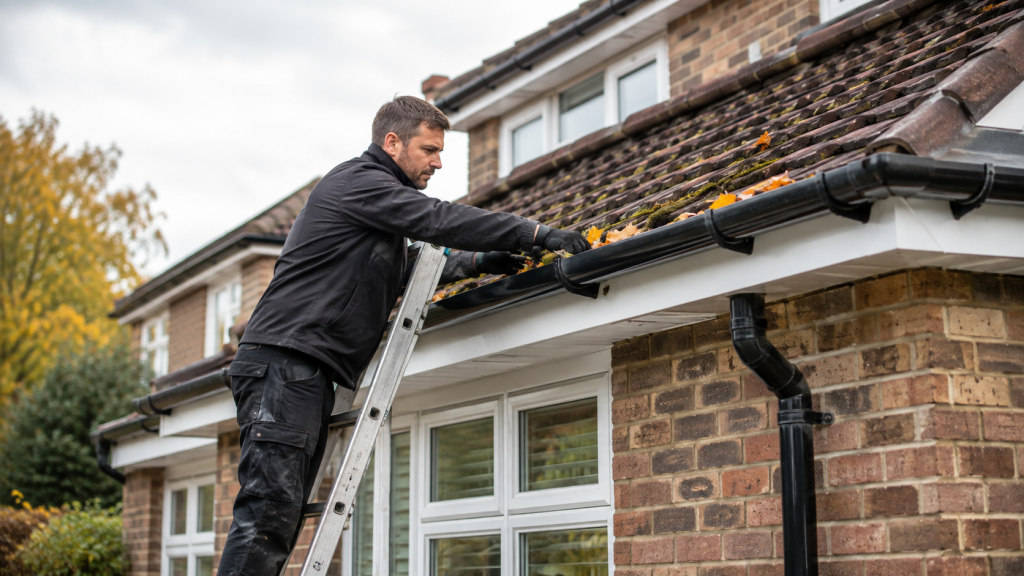
As summer draws to a close, roof maintenance is unlikely to be at the top of most homeowners’ lists. However, September is one of the best times to check your gutters and roofline before autumn brings falling leaves, heavier rain and stronger winds.
A blocked or damaged gutter may seem like a minor problem, but it can allow rainwater to overflow onto walls, roof timbers and foundations. Dealing with it now could prevent damp, leaks and expensive repairs later in the year.
Why gutters matter more than you might think
Gutters have a simple but important job: collecting rainwater from the roof and carrying it safely into the drainage system. When they are working correctly, you may barely notice them. When they become blocked, cracked or loose, the effects can spread well beyond the gutter itself.
Leaves, moss, twigs and other debris can build up inside the guttering and around downpipe openings. Water then has nowhere to go, so it spills over the edge or backs up beneath the roof covering. Repeated exposure to water can eventually damage fascia boards, soffits, brickwork and internal decoration.
Why September is a good time for a gutter inspection
Early autumn offers an ideal opportunity to find existing problems before the wettest part of the year arrives. The longer a blockage remains in place, the greater the chance of persistent rain exposing a weakness.
An inspection in September can identify:
- Loose, cracked or sagging sections of guttering
- Joints that have started to leak
- Leaves, moss and debris restricting the flow of water
- Blocked or poorly connected downpipes
- Damaged fascia boards or soffits
- Slipped or broken tiles close to the roof edge
- Signs that rainwater is running down the outside wall
It also allows time for repairs to be completed before shorter days and unsettled weather make roof work more difficult.
Warning signs of blocked or damaged gutters
Some gutter problems are only obvious when it rains. If possible, take a look at the outside of your property during or shortly after a downpour, while remaining safely at ground level.
Look out for water pouring over the sides of the gutter, dripping from joints or collecting in one area. Dark streaks on walls, peeling exterior paint and patches of green growth can also indicate that water has regularly been escaping where it should not.
Other signs include gutters pulling away from the fascia, sections that appear uneven, damp patches near the ceiling or mould developing on an external wall. A downpipe that remains dry while water is overflowing nearby may be blocked.
How blocked gutters can affect your roof
Overflowing water does not always fall harmlessly to the ground. It can soak into timber roofline components or find its way behind fascia boards. If roofing felt, tiles or mortar at the eaves are already worn, trapped water may exploit the weakness and enter the roof space.
During cold weather, standing water can freeze and expand. The added pressure may worsen cracks, separate joints or distort the guttering. Saturated debris also becomes heavy, placing extra strain on fixings and potentially causing the gutter to sag or pull away.
On flat roofs, blocked outlets are particularly important. Water that cannot drain properly may pool on the surface, increasing the load on the roof and placing additional pressure on seams, joints and vulnerable areas.
Do not forget fascias and soffits
Cleaning the gutter is only part of the job. The boards supporting and surrounding it should also be checked for deterioration.
Fascias support the lower edge of the roof and provide a fixing point for the guttering. Soffits protect the underside of the roofline and can help ventilate the roof space. Cracks, rot, flaking paint or visible movement should not be ignored.
If water has repeatedly overflowed from a gutter, the damage may continue even after the blockage is removed. A professional inspection can establish whether the roofline simply needs a small repair or whether a section should be replaced.
Can you clean gutters yourself?
Debris may look easy to remove, but working at roof height carries a serious risk. Avoid climbing onto the roof or stretching from a ladder, particularly when surfaces are wet or slippery.
Some low-level guttering may be accessible with purpose-made equipment used from the ground. However, if the gutter is high, difficult to reach, visibly damaged or still overflowing after cleaning, it is safer to call an experienced roofing professional.
A roofer can check more than the blockage itself. They can inspect joints, brackets, roof edges, tiles, flat-roof outlets and the condition of the fascia and soffit, helping to identify the cause rather than simply treating the symptom.
A small check now can prevent a larger repair
Gutter and roofline problems rarely improve on their own. A loose joint, small blockage or damaged bracket may be quick to fix now, but months of heavy rain can turn it into damp brickwork, rotten timber or water entering the property.
Black Leaf Roofing provides professional gutter, fascia, soffit and roofing services across Billericay, Brentwood, Southend, Basildon and the surrounding areas of Essex.
Whether you have noticed an overflow, suspect a blockage or simply want your roofline checked before autumn, our experienced team can assess its condition and recommend the right solution.
Contact Black Leaf Roofing today to arrange an inspection or request a quotation.