
Heavy rain does not always cause obvious roof damage straight away. In many homes, a roof can let in small amounts of water without creating an immediate drip, stain or visible leak. This is why roof damage after heavy rain can go unnoticed for weeks or even months.
The problem is that small leaks rarely stay small forever. Water can travel through felt, timber, insulation and ceiling spaces before it appears inside the home. By the time you notice a damp patch on the ceiling, the issue may have already affected more than one part of the roof structure.
How heavy rain can get into your roof
Heavy rain can find weak points that are not easy to see from the ground. A single slipped tile, cracked ridge tile, damaged flashing or blocked gutter can allow rainwater to get where it should not.
Water can also enter around chimneys, roof valleys, skylights, vents and joins between different roof sections. These areas are often more vulnerable because they rely on good sealing, correct installation and regular maintenance.
During normal rain, a small weakness may not cause a problem. During persistent or wind-driven rain, water can be pushed under tiles, into gaps and behind roofline areas. This is why some roof leaks only appear during heavy weather.
Signs of hidden roof damage
Not every roof leak starts with water dripping through the ceiling. Some of the early signs are much easier to miss.
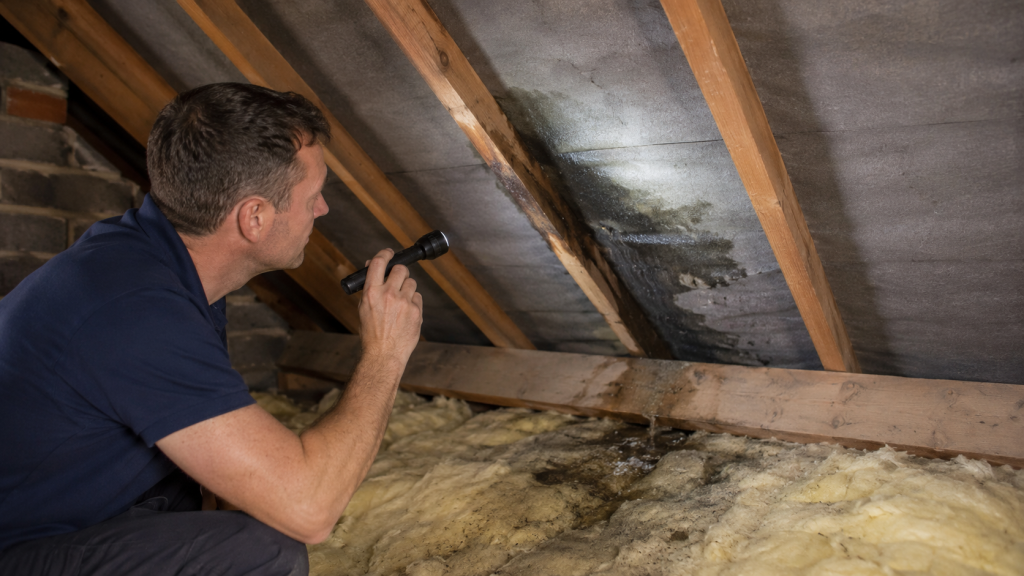
You may notice a musty smell in the loft, damp insulation, darker patches on timber, peeling paint, bubbling plaster or a ceiling stain that slowly appears after heavy rain. In some cases, you may only spot the issue when you go into the loft and see daylight, wet felt or water marks.
Gutters can also give clues. If water is overflowing, running down the wall or pooling near the property, it may be putting pressure on roof edges, fascias and brickwork.
Why loft checks are important after heavy rain
One of the best ways to spot hidden roof damage is to check the loft after a period of heavy rain. You do not need to touch anything or move insulation around if it is unsafe, but a visual check can often reveal early warning signs.
Look for wet patches, damp smells, dark timber, water marks, sagging insulation or signs that rain has been getting in around the roofline. If you can see daylight through the roof, or if anything looks wet, it is worth getting it checked by a roofing specialist.
A loft check is especially useful because water can sit above the ceiling before it becomes visible in the rooms below.
Why damp insulation should not be ignored
Wet insulation is a common sign that water has entered the roof space. Even if the ceiling below still looks fine, damp insulation can reduce warmth in the home and hold moisture against timber and plasterboard.
Over time, this can lead to further damage, staining, mould and unpleasant smells. If insulation has become wet because of a roof issue, the cause of the leak should be found before anything is replaced or dried out.
Small leaks can become bigger roofing problems
A small leak may seem minor, but repeated rain can make the problem worse. Water can gradually damage battens, felt, timber, ceilings and internal finishes. What starts as a small repair can become more expensive if it is left too long.
This is why it is sensible to act early, even if the signs are minor. A quick roof inspection can often identify whether the problem is a slipped tile, damaged flashing, blocked gutter, flat roof issue or another roofing defect.
When should you call a roofer?
You should contact a roofer if you notice damp patches, water marks, missing tiles, loose ridge tiles, overflowing gutters, wet loft insulation or signs of water around a chimney, skylight or roof valley.
It is also worth arranging a check if your roof has recently been exposed to heavy rain, strong winds or stormy weather and you are unsure whether any damage has occurred.
Black Leaf Roofing can inspect your roof, identify the source of water ingress and advise whether a repair is needed. Catching the problem early can help prevent further damage and give you peace of mind before the next spell of bad weather.
Final thoughts
Heavy rain can damage a roof without creating an obvious leak straight away. Hidden water ingress, damp loft insulation and small roof defects can all lead to bigger problems if ignored.
If you have noticed signs of damp, staining or water entering your property after heavy rain, it is better to get it checked sooner rather than later. A professional roof inspection can help find the issue early and stop a small leak becoming a much larger repair.
If you suspect hidden roof damage after heavy rain, contact Black Leaf Roofing for a professional roof inspection.