
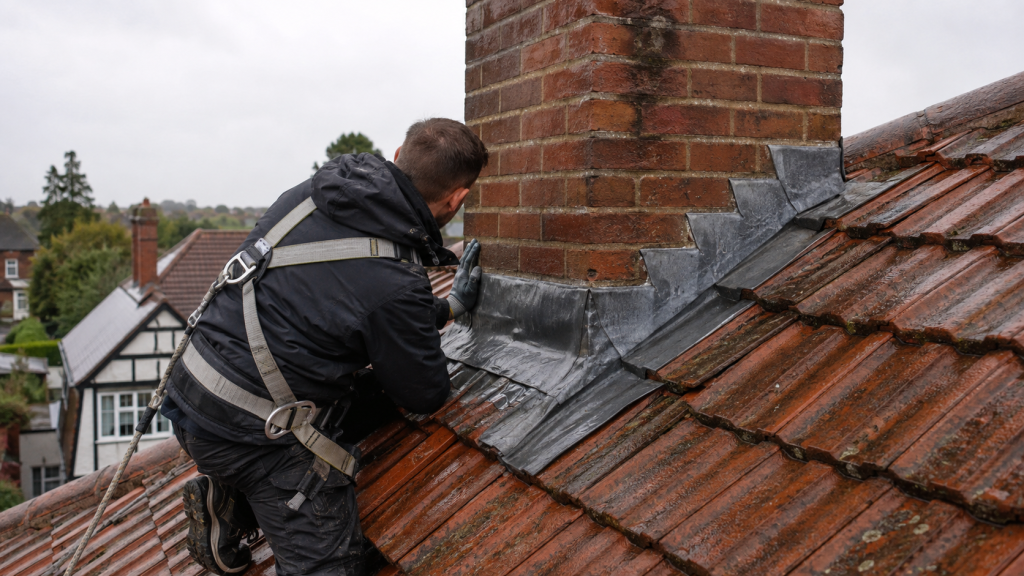
A leaking chimney can be difficult to diagnose. Water may appear on a ceiling, run down the chimney breast or create a damp patch in the loft, but the place where the water becomes visible is not necessarily where it entered the roof.
Chimneys contain several potential weak points, including brickwork, mortar joints, chimney pots, lead flashing and the surrounding roof tiles. When one of these components becomes damaged or worn, rainwater can find its way into the property.
The sooner the source of a chimney leak is identified, the easier it is to prevent damage to plaster, insulation, roof timbers and internal decorations.
What causes a chimney to leak?
There is no single cause that applies to every leaking chimney. A proper inspection may be needed to establish whether the problem is with the chimney itself, the surrounding roof or a combination of both.
Here are some of the most common causes.
Damaged or poorly fitted lead flashing
Lead flashing is installed around the base of a chimney to form a weatherproof junction between the chimney stack and the roof covering.
Over time, flashing can lift, crack, split or pull away from the brickwork. Older repairs may also have been completed using mortar or sealant that has subsequently deteriorated.
Once a gap develops, wind-driven rain can pass behind the flashing and enter the roof space. This is particularly common when a leak only appears during heavy rain or when the wind is blowing from a particular direction.
Depending on its condition, the flashing may be repaired or replaced with correctly fitted leadwork.
Cracked or missing chimney pointing
The mortar joints between chimney bricks are constantly exposed to rain, frost, wind and changing temperatures.
As the mortar deteriorates, small cracks and gaps can develop. These gaps allow moisture into the chimney stack and can eventually cause bricks to loosen or become damaged.
Repointing involves removing the loose or deteriorated mortar and replacing it with a suitable new mortar. However, repointing will only solve the leak if the mortar joints are the actual cause. Flashing, tiles and the top of the chimney should also be inspected.
Damaged chimney flaunching
Flaunching is the sloping mortar around the base of the chimney pots. It helps secure the pots and directs rainwater away from the top of the chimney stack.
Cracked or crumbling flaunching can allow water into the brickwork below. It may also leave a chimney pot less secure than it should be.
Because flaunching is difficult to see from ground level, deterioration can go unnoticed until damp appears inside the property or fragments of mortar begin falling onto the roof.
Problems with chimney pots and cowls
A damaged chimney pot can allow rainwater to enter the flue. Missing, unsuitable or incorrectly fitted cowls can also contribute to water entering from above.
An unused chimney should not simply be sealed without considering ventilation. Restricting ventilation can trap moisture inside the chimney and contribute to condensation or damp. The right solution will depend on whether the flue is active and how it is ventilated.
Broken tiles or slates near the chimney
The chimney may appear to be the source of a leak when the actual problem is a cracked tile, slipped slate or damaged roof covering nearby.
Water can enter higher up the roof, travel along roofing felt or timber and then appear next to the chimney breast. This is one reason why treating only the visible damp patch rarely solves the underlying problem.
The tiles or slates surrounding the chimney should be inspected alongside the flashing and brickwork.
Problems with roof valleys
Some chimneys are positioned close to a roof valley, where two sections of roof meet. Valleys carry a considerable amount of rainwater, particularly during a downpour.
Debris, damaged leadwork, cracked mortar or incorrectly positioned tiles can prevent water from draining properly. The resulting leak may appear to come from the chimney even though the valley is responsible.
Signs that your chimney may be leaking
A chimney leak is not always immediately obvious. Warning signs can include:
- Brown or yellow stains on ceilings near the chimney
- Damp patches on the chimney breast
- Peeling paint or lifting wallpaper
- White, powdery deposits on internal brickwork
- Wet loft insulation
- Damp or stained roof timbers
- A musty smell in the loft
- Loose bricks or crumbling mortar
- Pieces of mortar appearing in gutters or on the roof
- Water marks that become worse after heavy rain
These symptoms should be investigated rather than repeatedly painted over. Covering a stain will not prevent more water from entering the property.
Why does the leak only happen during heavy rain?
A small gap in flashing or pointing may remain dry during light rainfall. During prolonged or wind-driven rain, however, water can be forced beneath tiles, behind flashing or into deteriorated mortar joints.
The direction of the wind can provide a useful clue. If the leak only appears when rain is blowing towards one side of the house, the problem may be located on that face of the chimney or roof.
This is helpful information for a roofer, but it does not replace a proper inspection.
Can chimney sealant stop a leak?
Applying sealant may appear to offer a quick solution, but it can hide rather than correct the real defect. Sealants can deteriorate, separate from damp surfaces or trap moisture within the brickwork.
A lasting repair should address the component that has failed. This might involve renewing lead flashing, repointing brickwork, repairing flaunching or replacing damaged tiles.
What happens if a chimney leak is ignored?
Water ingress tends to become more expensive when it is left untreated. Continued exposure to moisture can damage:
- Ceiling plaster and internal decorations
- Loft insulation
- Roofing felt and battens
- Timber rafters
- Chimney brickwork and mortar
- Electrical fittings close to the affected area
A relatively localised roof repair can become a much larger job if water is allowed to enter over several months.
Should you inspect the chimney yourself?
You can safely look for internal warning signs from the loft, provided the area is accessible and properly boarded. You may also be able to spot obvious problems from ground level using binoculars or a camera with a zoom lens.
Do not climb onto the roof or use an unsecured ladder. Chimney repairs normally involve working at height and require suitable access and safety equipment.
Professional chimney repairs in Essex
If water is appearing around your chimney, Black Leaf Roofing can inspect the roof, identify the likely point of entry and recommend the appropriate repair.
Our roofing services include chimney maintenance, leadwork, tile and slate repairs, repointing and wider roof repairs. We work with homeowners across Maldon and the surrounding areas of Essex.
Addressing the problem early can prevent further water ingress and protect the structure beneath your roof.
Frequently asked questions
Can a roofer repair a leaking chimney?
A roofer can repair problems involving chimney flashing, surrounding tiles, slates, mortar and other external roofing components. Problems inside an active flue may require a suitably qualified chimney specialist.
Can an unused chimney still leak?
Yes. An unused chimney remains exposed to the weather and can develop problems with its brickwork, pointing, flaunching, flashing or ventilation.
Will repointing stop a chimney leak?
Repointing may stop the leak if deteriorated mortar joints are responsible. If the water is entering through damaged flashing or roof tiles, those components will also need attention.
How quickly should a chimney leak be repaired?
A chimney leak should be inspected as soon as possible. Even a small amount of water can damage insulation, plaster and timber if it continues entering the property.
How do I arrange a chimney inspection?
Contact Black Leaf Roofing on 07312 270667 or email blackleafroofing@gmail.com to discuss the problem and arrange an inspection.