
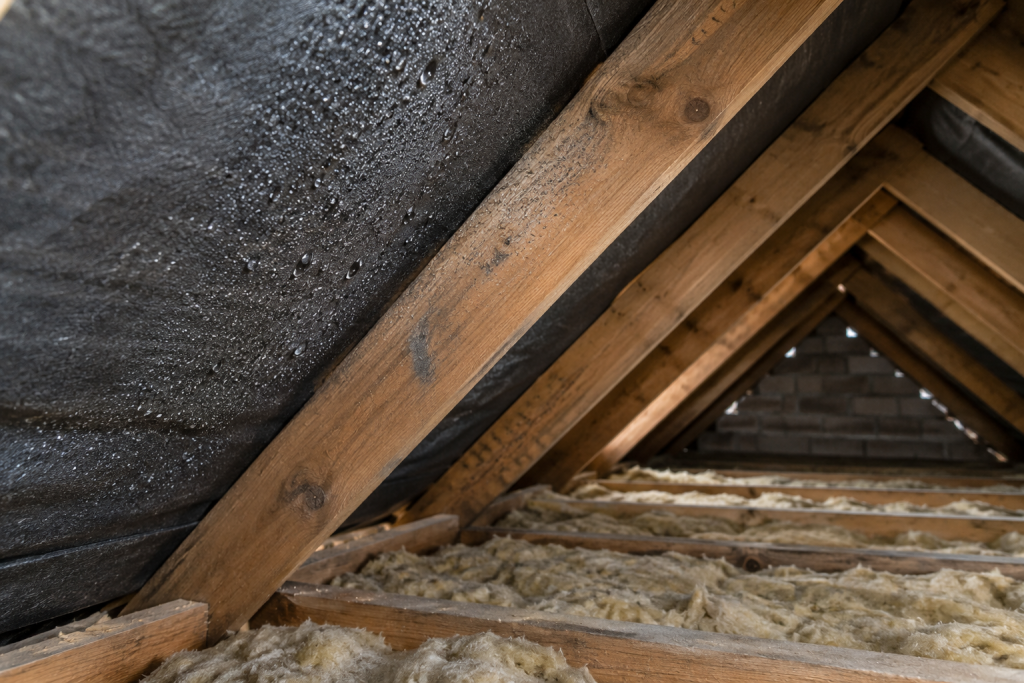
A wet loft does not always mean your roof is leaking. Condensation can form when moist air from your home reaches cold surfaces in the roof space. However, rainwater entering through damaged roofing can produce similar signs, so the cause needs checking before repairs are agreed.
As temperatures fall in October and households start using their heating more regularly, it is a good time to pay attention to damp in the loft. For homeowners in Maldon, Chelmsford and across Essex, identifying the source can help prevent unnecessary work and avoid leaving a genuine roof defect untreated.
What causes condensation in a loft?
Everyday activities such as showering, cooking and drying clothes indoors release moisture into the air. If that air reaches cold surfaces in the loft, condensation can form. Controlling moisture and maintaining suitable ventilation help reduce the risk.
A loft can have plenty of insulation and still develop damp. Insulation reduces heat escaping from the rooms below, making the roof space cooler. Energy Saving Trust advises investigating existing damp before adding insulation and keeping ventilation openings clear.
How can I tell whether it is condensation or a roof leak?
The pattern and timing of damp can provide useful clues, although they cannot confirm the cause on their own.
Condensation may become noticeable during cold weather, including periods without rain. Rainwater entry is more likely to be suspected when damp appears or worsens after rainfall.
Before arranging an inspection, note:
- Whether the damp appears after rain, during cold spells, or both.
- Whether moisture affects several areas or one concentrated patch.
- Whether the problem started after insulation or other building work.
- Whether the same area repeatedly becomes wet.
Photographs and dates can help the person investigating the problem, particularly if the loft is dry when they attend.
Avoid assuming that a ceiling stain reveals exactly where water entered. A roofing inspection should establish the source before a repair is recommended.
Can topping up loft insulation make damp worse?
It can if existing moisture or ventilation problems remain unresolved.
Insulation helps reduce heat loss, but it also changes conditions in the roof space. Adding more insulation without addressing existing damp can worsen the problem, and ventilation openings must remain unobstructed.
If you have noticed moisture since your loft was insulated, arrange an assessment of both the installation and roof space. The appropriate solution depends on how the roof is constructed and where the moisture is coming from.
What should I check before winter?
If your loft is safely accessible, look from a secure position for visible damp and changes since your last visit.
Check whether stored items appear to obstruct ventilation openings. Note any wet areas, unusual staining or moisture around roof junctions, and record when you first noticed them.
Only enter a loft with safe access and suitable boarding. Never step between joists, and leave roof access and external inspections to a professional.
If you are planning insulation work, raise any existing damp concerns before installation begins. Fixing the cause first is part of preparing the roof space properly. Energy Saving Trust
Does a damp loft mean I need a new roof?
Not necessarily. The right response depends on the source of the moisture and the condition of the roof.
An inspection may identify a roofing defect that needs a targeted repair. Where condensation is responsible, the assessment needs to consider ventilation, insulation and moisture entering from the rooms below.
Damp alone is not enough to decide that a complete roof replacement is required.
Black Leaf Roofing’s domestic roofing services across Essex include tiling, slating, felt and battening, leadwork and chimney repairs. If rainwater entry is suspected, the relevant roofing elements can be assessed. Black Leaf Roofing
Should I wait until spring?
Persistent or recurring damp deserves investigation before it becomes a familiar winter problem. Even without a drip into the rooms below, it is sensible to establish why the roof space keeps becoming wet.
For homeowners in Latchingdon, Maldon and the surrounding areas, contact Black Leaf Roofing to discuss a suspected roof leak. Explain where you have seen the damp, when it appears and whether any recent work has been carried out.
Finding the cause first makes it easier to choose the right repair and protect your home through the colder months.