
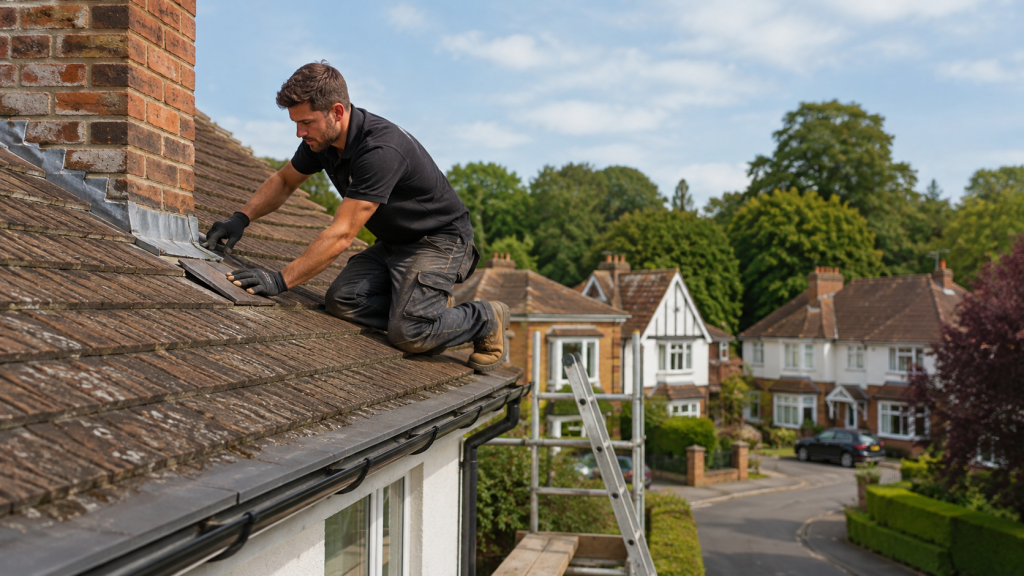
The most common roofing problems in Chelmsford homes include slipped or cracked tiles, damaged flashing, leaking flat roofs, deteriorating chimneys, blocked guttering and ageing roofing materials. Older properties can also develop problems with slate, underfelt and battens, while newer homes and extensions may experience issues around roof joints, valleys and flat-roof sections.
Catching these problems early can often mean the difference between a relatively straightforward repair and more extensive roofing work.
Why Do Roof Problems Develop in Chelmsford?
Chelmsford has a varied housing stock, from older properties around the city centre and established areas such as Moulsham and Broomfield to family homes in Springfield, Great Baddow and Writtle and newer developments around the city.
Different types and ages of property bring different roofing issues. Older roofs may be affected by ageing tiles, slate, mortar and leadwork, while newer extensions and alterations often introduce additional roof junctions, valleys and flat roofing areas that need to remain properly weatherproof.
Essex weather also plays a part. Strong winds can loosen tiles, prolonged rain can expose weaknesses around flashing and joints, and repeated wet and dry conditions gradually take their toll on roofing materials.
Slipped, Cracked or Missing Roof Tiles
Tile damage is one of the most noticeable roofing problems.
Tiles can crack through age, frost or impact, while strong winds can loosen or dislodge them. A missing tile may appear to be a small problem, but it can expose the felt and roof structure beneath to rain.
Signs of tile problems include uneven sections of roofing, pieces of tile around the property and visible gaps when viewing the roof safely from ground level.
Individual damaged tiles can often be replaced without requiring major work, particularly when the problem is identified early.
Leaks Around Chimneys and Lead Flashing
Chimneys are a common source of water ingress because several different roofing materials meet around them.
Lead flashing is installed to prevent water entering the joint between the chimney and roof. Over time, flashing can lift, split or deteriorate, while mortar around chimney stacks can also begin to fail.
A leak that appears near a chimney inside the loft does not necessarily mean the main roof covering has failed. The problem may instead be localised around flashing, pointing or another roof junction.
Problems With Older Slate and Tiled Roofs
Chelmsford has many older properties where traditional slate and clay tiles form an important part of the building’s appearance.
Natural slate can last for many years, but the fixings holding individual slates may eventually deteriorate. Clay tiles can also crack or become damaged over time.
On an older roof, it is important to assess the overall condition rather than simply replacing individual tiles repeatedly. If problems are becoming frequent, the condition of the battens, felt and roof structure beneath should also be considered.
For properties in conservation areas or with particular architectural features, appropriate materials may also need to be considered when carrying out repairs.
Flat Roof Leaks
Flat roofs are common on garages, extensions, porches and other additions to Chelmsford homes.
Typical flat roof problems include water pooling, cracks or splits in the covering, deterioration around edges and outlets, and leaks around the point where the flat roof meets the main building.
Standing water does not automatically mean a flat roof has failed, but persistent pooling or visible deterioration should be investigated.
Depending on the age and condition of the roof, a localised repair may be sufficient. Older or extensively damaged flat roofs may be more economical to replace.
Blocked or Damaged Guttering
Not every apparent roofing problem starts with the roof itself.
Leaves, moss and other debris can block gutters and downpipes, preventing rainwater from draining correctly. Water can then overflow against fascias, walls and roof edges.
Problems to look out for include overflowing gutters during rain, water staining on exterior walls, sagging guttering and vegetation growing from the gutter.
Damaged fascias and soffits can also allow moisture into vulnerable parts of the roofline.
Moss Build-Up
Moss is particularly common on shaded roof slopes and properties surrounded by mature trees.
A small amount of moss does not necessarily mean a roof is damaged, but heavy growth can retain moisture and interfere with the way water drains from tiles. Loose moss can also fall into gutters and contribute to blockages.
Aggressive pressure washing should generally be avoided on roofing materials because it can cause additional damage. The appropriate treatment depends on the type and condition of the roof.
Ageing Felt and Roof Battens
Sometimes the tiles visible from outside are not the main cause of a roofing problem.
Older roofs may have deteriorating underfelt beneath the tiles or problems with the timber battens supporting them. These components provide additional protection and support to the roof covering.
Signs of underlying deterioration can include recurring leaks despite tile repairs, visible daylight from the loft, sagging areas or sections where tiles repeatedly move.
An inspection can help establish whether the problem is confined to the roof covering or extends further into the roofing system.
Roof Damage After Heavy Rain or Strong Winds
Roof problems often become noticeable immediately after a spell of bad weather.
Wind may move tiles or damage flashing, while sustained rain can find its way through weaknesses that had previously gone unnoticed.
After severe weather, homeowners should look from ground level for:
- Missing, slipped or broken tiles
- Loose materials around the property
- New damp patches or water staining indoors
- Overflowing or damaged guttering
- Visible damage around chimneys or roof edges
- New leaks within loft spaces
Avoid climbing onto the roof yourself. Roofing damage is much safer to investigate with the correct access equipment.
Does a Damaged Roof Always Need Replacing?
No. Many roofing problems can be repaired without replacing the entire roof.
A relatively young roof with a few damaged tiles, isolated flashing failure or a localised leak may only require targeted repair work.
Replacement becomes more likely when a roof is reaching the end of its useful life, problems are widespread, leaks repeatedly return or the underlying roofing structure has significantly deteriorated.
A reputable roofer should assess the cause of the problem before recommending whether repair or replacement represents the better long-term option.
Roofing Problems in Older Chelmsford Properties
Owners of older homes should be particularly careful about making unnecessary changes to traditional roofs.
Properties around areas such as central Chelmsford, Moulsham, Writtle, Broomfield and Great Baddow include older buildings where slate, clay tiles, chimneys and traditional roof forms contribute to the character of the property.
Where a home is listed or situated within a conservation area, additional considerations may apply before significant alterations are made. Repairs using materials appropriate to the existing roof can also help preserve the property’s appearance.
Roof Repairs Across Chelmsford
Black Leaf Roofing provides domestic roofing services throughout Chelmsford and surrounding areas, including Great Baddow, Springfield, Broomfield, Writtle, Galleywood, Boreham and neighbouring communities.
Based in Latchingdon, Essex, our family-run team has nearly 25 years of roofing experience and carries out work ranging from minor roof repairs and replacement tiles to flat roofing, chimney work, leadwork and complete roof replacements.
Frequently Asked Questions About Roofing Problems in Chelmsford
What is the most common cause of a leaking roof?
There is no single cause. Common problems include damaged tiles, deteriorated flashing, problems around chimneys and valleys, failing flat-roof coverings and blocked drainage. An inspection is usually needed to identify exactly where water is entering.
Can one missing roof tile cause a leak?
Yes. A single missing or badly damaged tile can expose the layers beneath the roof covering to rain. It is worth having missing tiles replaced promptly before water causes additional damage.
Should I have my roof checked after a storm?
If you notice missing tiles, new leaks, damaged guttering or other visible changes after strong winds or heavy rain, arranging an inspection is sensible.
How do I know whether my roof needs repairing or replacing?
The decision depends on the age of the roof, the extent of the damage and the condition of the materials beneath the roof covering. Localised problems can often be repaired, while widespread deterioration may make replacement the more practical long-term solution.
Concerned About Your Roof in Chelmsford?
If you have spotted a leak, damaged tiles or another roofing problem at your Chelmsford property, contact Black Leaf Roofing for advice and a quotation.
Identifying the cause early can help prevent a relatively small roofing problem from developing into more extensive damage.